
Exsalta: Low Flow Secretion Withdrawal System
A new approach for neonatal ETT tube suction.
Exsalta is a precision device designed for ETT tube secretion withdrawal, providing a controlled, low-flow procedure that clears the ET tube while maintaining FRC. In a recent NICU study, Exsalta demonstrated significant improvements compared to traditional wall suction.

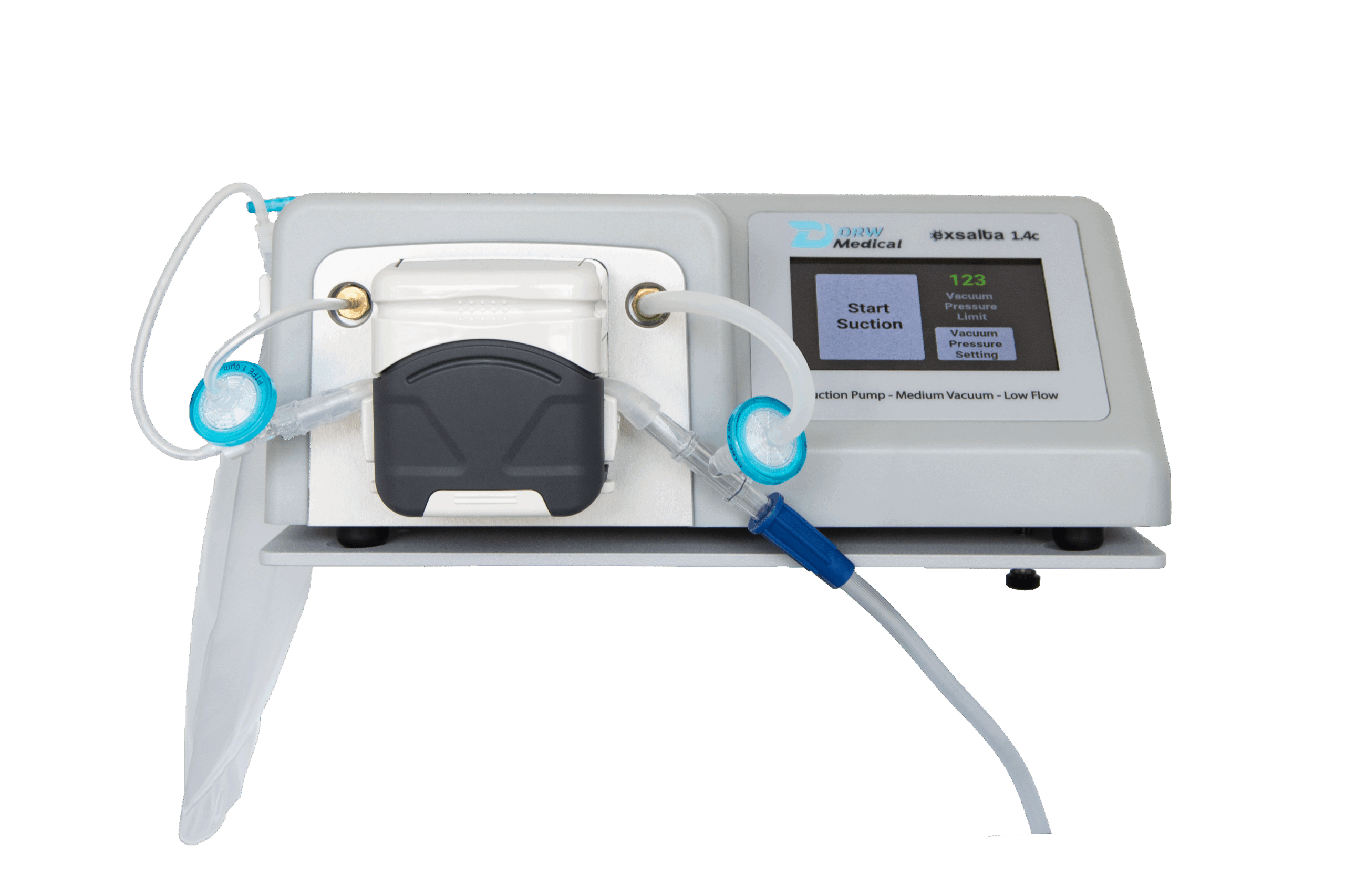
The Modern NICU
Today’s NICU has an impressive display of specialized digital technology at every bedside, purpose-built for neonates.
Wall suction hasn’t changed. It’s the same general-purpose analog tool hospitals standardized for adults in the 1970s. The cardiorespiratory instability associated with high-flow suctioning is well documented. Desaturation, bradycardia, and recovery delays are familiar tradeoffs that can now be reduced.
Clinicians have managed around the limitations of wall suction because there was no alternative — until now.
Why secretion withdrawal is different than suction
Conventional wall suction generates high airflow through a catheter, which can be anywhere from 4 to 24 liters per minute depending on catheter size and regulator setting. High flow will pull secretions, along with air from the patient’s lungs. The result is the cascade clinicians know well: alveolar collapse, desaturation, bradycardia, and a lengthy recovery period.
Exsalta withdraws secretions at a controlled flow of 0.8 to 1.4 L/min regardless of catheter size or pressure setting. This is enough flow to move secretions, but not enough to destabilize the patient.
With wall suction, pressure and flow are proportional. Increasing pressure to move secretions also increases airflow through the catheter, risking patient destabilization. Decreasing pressure to protect the patient decreases secretion removal efficiency, meaning secretions don’t move.
Clinicians are currently balancing two competing needs on a single dial. Exsalta removes this tradeoff.

Clinical evidence in mechanically ventilated neonates
A study presented at the Pediatric Academic Societies meeting (Sahni et al., Columbia University Vagelos College of Physicians and Surgeons, April 2026) compared Exsalta to standard conventional wall suction in 10 mechanically ventilated preterm and term neonates across 40 crossover ETT suctioning procedures.
Compared to wall suction, secretion withdrawal with Exsalta produced:
- Smaller heart rate drops during the procedure (−17.2 vs. −26.5 bpm, p=0.0005)
- Smaller SpO₂ drops during the procedure (−5.6% vs. −11.3%, p<0.0001)
- Lower FiO₂ boost required to recover (0.16 vs. 0.20, p=0.0007)
- Higher post-procedure HR and SpO₂ during recovery (p=0.01 and p=0.0001)
The authors concluded that Exsalta’s controlled low flow “allows for effective removal of secretions while avoiding unnecessary negative pressure and preserving lung volume.”

Supporting research
An independent bench study at Texas State University (Russian & Gonzales, Department of Respiratory Care) compared Exsalta to wall suction across ETT sizes from 2.0mm to 8.0mm. The study found that Exsalta generated significantly lower airflow and lower negative airway pressure while removing an equivalent amount of sputum from neonatal-sized ETTs (p=0.075).

See it in action
This bench demonstration shows what happens to airway pressure during wall suction versus Exsalta in a simulated airway model.
The ET tube in the video is without secretions and demonstrates free airflow. In clinical use, free flow only occurs when the catheter is cleared of secretions.
Bring advanced secretion withdrawal to your unit.
Exsalta is FDA-cleared and available now. We’ll arrange a clinical introduction, a hands-on demonstration, or a sample for evaluation.